




Si vous tapez “ comment lancer sa propre marque de sous-vêtements amincissants ” dans un moteur de recherche, vous tombez à chaque fois sur le même article en dix étapes. Créer une entreprise, choisir un créneau, concevoir un logo, trouver un fabricant, créer une boutique Shopify. C’est à la quatrième étape que l’argent entre réellement en jeu, et elle n’est généralement résumée qu’en une seule phrase.
Ce guide ne traite que de la quatrième étape. Il est rédigé du point de vue du fabricant, car c'est précisément sur ce point que nous constatons que les nouvelles marques commettent souvent des erreurs.
Le marché, ça existe, mais ce n'est pas là que réside la difficulté
Le marché mondial des vêtements amincissants était évalué à 2,9 milliards de dollars en 2025 et devrait atteindre 5,4 milliards de dollars d'ici 2033, avec un taux de croissance annuel composé de 8,11 % (Grand View Research, 2026). L'Amérique du Nord détenait la plus grande part régionale, avec 38,61 % en 2024, et la vente en ligne est le canal de distribution qui connaît la croissance la plus rapide.
C'est pour ces chiffres que les gens lancent des marques de sous-vêtements amincissants. Mais ce n'est pas pour cela que certaines de ces marques survivent. La demande ne manque pas dans ce secteur. Ce qui fait défaut, c'est un premier lot de production qui soit à la bonne taille, livré dans les délais et qui laisse une marge suffisante pour financer un deuxième lot.
Déterminez quel type de marque vous êtes réellement en train de créer
Presque tous les nouveaux créateurs d'entreprise décrivent leur projet de la même manière : “ ma propre marque de sous-vêtements amincissants ”. Derrière cette formule se cachent trois projets très différents, avec des budgets et des délais qui varient considérablement.
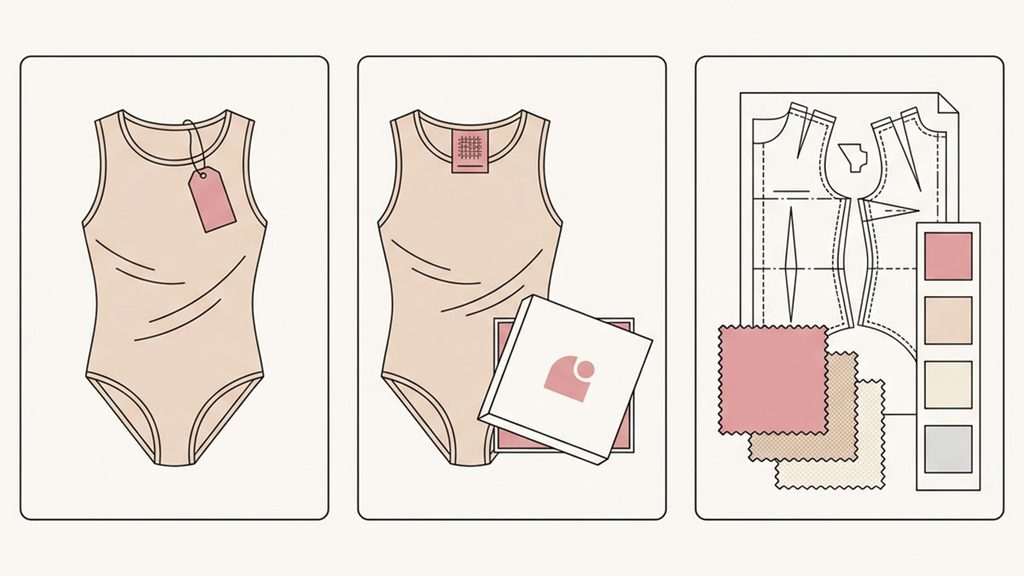
Votre marque sur un modèle existant. Vous choisissez des articles dans le catalogue d’un fabricant, vous y apposez votre logo et vous les vendez sous votre marque. Le vêtement reste exactement le même. Les quantités minimales sont faibles, souvent à partir d’environ 50 pièces par modèle, et vous pouvez commencer à vendre en quelques semaines. Ce qui vous distingue, c’est votre marque, vos photos et votre public, et non le produit lui-même.
Un style existant, modifié. Il s'agit du même vêtement de base, mais avec votre propre étiquette tissée, vos étiquettes d'entretien, un emballage personnalisé et, parfois, une couleur différente. Le produit reste fondamentalement un modèle de catalogue. Ce que vous achetez, c'est une expérience de déballage à l'image de votre marque plutôt qu'un nouveau design.
Fabriqué selon vos propres spécifications. Votre tissu, votre patron, vos zones de compression, votre grille de tailles. C'est de là que naît un produit véritablement différencié, mais c'est aussi là que le temps de développement, le coût des échantillons et les quantités minimales augmentent tous en même temps.
La plupart des guides orientent directement les nouveaux créateurs vers la troisième option, car le terme “ sur mesure ” évoque une véritable marque. Dans la pratique, une grande partie des marques avec lesquelles nous travaillons commencent par la première option, vérifient que leur public achète leurs produits, puis passent à l'étape suivante lorsque le volume le justifie. C’est en commençant par le haut que les créateurs se retrouvent avec 800 unités d’un modèle non validé dans un garde-meuble.
Ce qu'une usine de sous-vêtements amincissants attend réellement de vous
Les nouveaux créateurs d’entreprise attendent souvent avant de contacter un fabricant, car ils pensent qu’ils doivent d’abord disposer d’un dossier technique complet. Ce n’est pas le cas.
Si vous partez de styles du catalogue, Une usine a besoin de trois informations : les modèles que vous souhaitez, le nombre approximatif d'articles et ce que vous voulez voir figurer sur l'étiquette. Cela suffit pour établir un devis.
Si vous développez un modèle sur mesure, plus vous en fournirez, mieux ce sera, mais cela restera tout de même moins que ce à quoi vous pourriez vous attendre. Les échantillons de référence ont plus d’importance que les croquis. Un vêtement que vous possédez déjà, accompagné de notes sur les modifications que vous souhaiteriez y apporter, en dit plus en cinq minutes qu’une page d’illustrations techniques. Des photos de la coupe que vous visez sont utiles. Un dossier technique, si vous en avez un, permet d'éviter une phase de prototypage, mais son absence n'est pas un obstacle.
Ce qui ralentit véritablement le processus, c'est le manque de précision concernant la clientèle cible. La notion de “ compression ferme ” n'a pas la même signification pour un vêtement post-partum que pour un body de soirée. Indiquez à l'usine qui le portera et dans quelles circonstances : les choix concernant le tissu et la confection deviendront alors évidents.
La phase d'essai vous permet de savoir si vous êtes prêt
Le sampling est la leçon la plus chère et la moins chère de ce secteur. C’est aussi le poste sur lequel la plupart des fondateurs débutants sous-estiment leur budget.
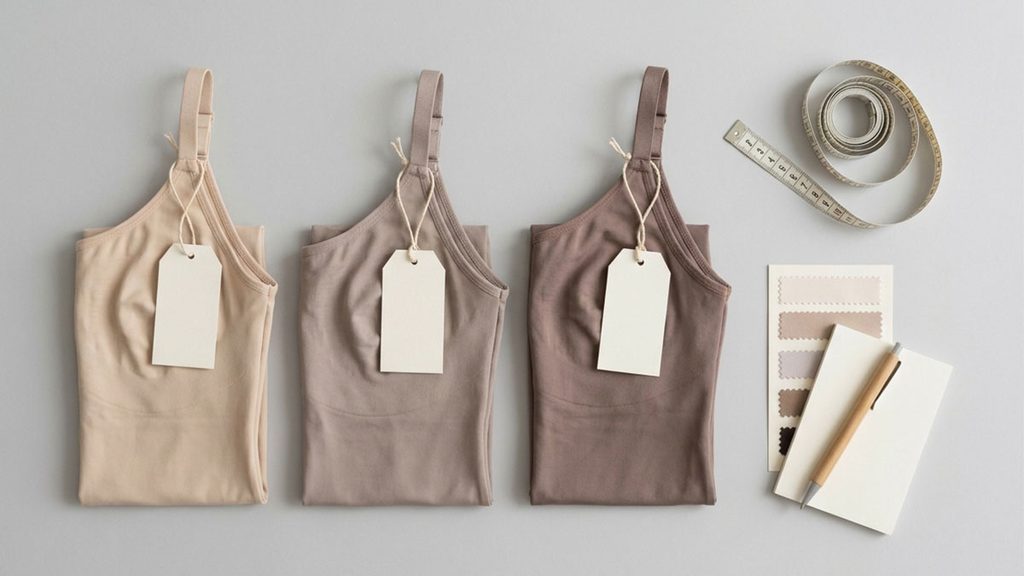
Pour un modèle de catalogue sans modification, les échantillons coûtent entre 7 et 15 dollars américains pièce et sont expédiés sous trois jours environ. Si vous souhaitez le même modèle dans une autre couleur ou avec votre logo, comptez entre 50 et 100 dollars américains par couleur et environ une semaine.
La mise au point d'un nouveau produit coûte plus cher, car l'usine doit fabriquer un prototype plutôt que de puiser dans ses stocks. Un nouveau style sans coutures coûte entre 80 et 120 dollars US pièce ; un modèle « cut-and-sew », entre 50 et 80 dollars US. Ces prix ne comprennent pas les frais de port.
Le montant des frais d'échantillons vous sera intégralement remboursé sur votre commande en gros dès que celle-ci atteindra la quantité minimale ou 200 pièces, y compris pour une première commande. Le coût réel de évaluation d'une usine Ce qui compte vraiment, c'est le temps, pas l'argent, à condition bien sûr de passer effectivement la commande.
Commandez des échantillons auprès de plusieurs usines avant de vous engager. Essayez-les. Lavez-les cinq fois. Demandez à quelqu’un qui se situe dans la limite supérieure de votre fourchette de tailles de les essayer. La fiche technique ne vous dira pas si les bas de jambe s’enroulent après une heure passée assis.
C'est au niveau des tailles des vêtements amincissants que les nouvelles marques perdent discrètement de l'argent
S'il y a bien une chose que nous mettrions en tête de chaque guide intitulé “ Comment lancer une marque de sous-vêtements amincissants ”, c'est celle-ci.
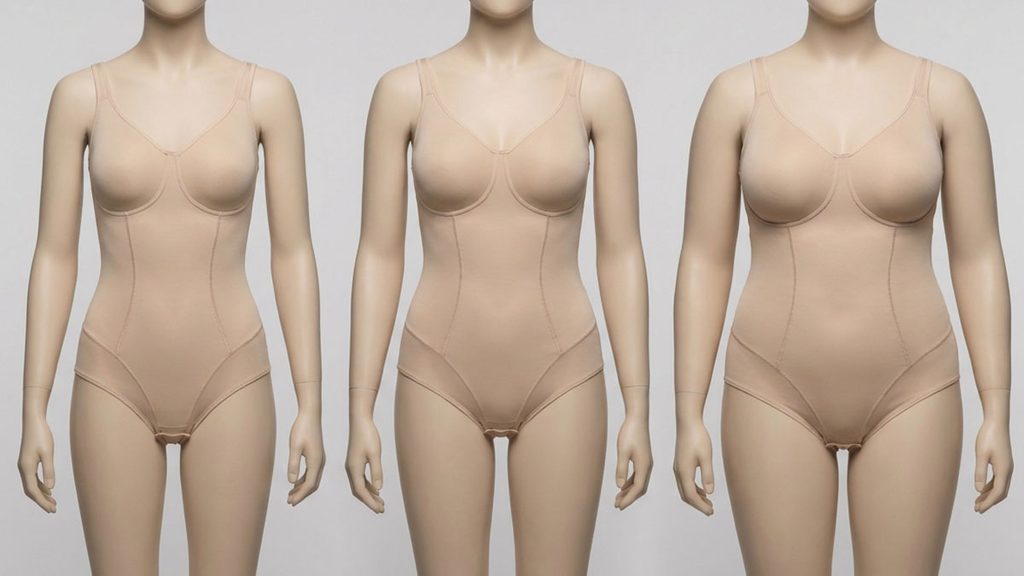
Les retours de vêtements amincissants sont principalement liés à la coupe, et les problèmes de coupe dans cette catégorie sont rarement dus à la taille de base. Ils apparaissent aux extrémités de la gamme. Un patron qui s'ajuste bien en taille M perd souvent son effet galbant en 3XL, ou les bords ont tendance à s'enrouler, ou encore la compression qui semblait offrir un bon maintien en taille S peut s'avérer trop contraignante pour la même taille sur une morphologie différente.
Les grandes tailles ne constituent pas ici un simple complément de niche. La demande en tailles étendues est forte sur les marchés occidentaux, et c’est le segment le moins tolérant vis-à-vis d’un calibrage bâclé. Une gamme allant du S au 5XL n’est pas la même chose qu’une gamme conçue pour s’adapter jusqu’au 5XL.
Demandez à n'importe quel fabricant potentiel comment il gère les tailles supérieures à 2XL, et si les empiècements de compression sont redimensionnés ou simplement agrandis à l'échelle. Commandez ensuite un échantillon dans la taille la plus grande de la gamme, et pas seulement dans votre propre taille. Un seul retour de commande coûte plus cher que l'échantillon lui-même.
Un calendrier réaliste de premier ordre
Les fondateurs sous-estiment systématiquement cet aspect, puis promettent des dates de lancement qu’ils ne peuvent pas respecter.
La réalisation d'échantillons pour un modèle de catalogue prend plusieurs jours. Pour un nouveau modèle, chaque cycle de réalisation d'échantillons dure une semaine, voire plus, et il est courant de procéder à deux cycles ; cela ne signifie pas pour autant qu'il y a eu un problème. Une fois l'échantillon validé, la production en série dure environ 25 jours avant l'expédition. Le transport maritime ajoute plusieurs semaines, selon la destination ; le transport aérien est plus rapide, mais nettement plus coûteux à l'unité.
Partez de là pour remonter dans le temps. Si vous souhaitez disposer d'un stock pour une saison précise et que vous développez un modèle sur mesure, il faut compter environ trois mois entre la première discussion et la réception des marchandises. En partant de modèles du catalogue, ce délai est considérablement réduit, ce qui constitue une raison supplémentaire pour laquelle il s'agit d'un bon point de départ.
Questions que nous posent les créateurs d'entreprise débutants
Dois-je avoir une société enregistrée avant de contacter une usine ? Ce n'est pas pour obtenir des devis ou des échantillons. Vous en aurez besoin pour importer à des fins commerciales et pour mettre en place le paiement correctement ; commencez donc les démarches d'enregistrement en parallèle plutôt que de les considérer comme une étape obligatoire.
Dois-je demander des certificats ? Oui, et demandez à les consulter plutôt que de vous fier aux informations fournies sur un site web. La norme ISO 9001 porte sur les processus de gestion de la qualité, la norme BSCI concerne la conformité sociale dans les usines, et la norme OEKO-TEX Standard 100 garantit que le tissu ne contient aucune des substances nocives répertoriées. Les certifications dont vous avez besoin dépendent de vos marchés de vente et des plateformes sur lesquelles vous proposez vos produits.
Puis-je commencer par un seul style ? Oui, et c'est souvent plus judicieux que de lancer une collection. Un seul modèle, décliné dans les couleurs que votre clientèle achète réellement, vous permet d'évaluer clairement la demande. Il est plus facile de créer des collections une fois que vous savez quels vêtements se vendent bien.
Comment puis-je vérifier si une usine est authentique ? Demandez à voir une vidéo présentant la production de votre style spécifique plutôt qu’une vidéo de présentation des locaux. Demandez qui est votre interlocuteur et si cette personne restera en charge de votre dossier. Demandez ce qui se passe en cas de défaut sur une livraison, et vérifiez si la réponse est précise.
Et maintenant, quelle est la prochaine étape ?
Pour lancer une marque de sous-vêtements amincissants, l'essentiel n'est pas tant d'avoir un concept de produit parfait que de réussir à passer le cap de la première commande sans encombre. Choisissez la stratégie de lancement qui correspond à votre budget réel et à vos résultats de validation, testez soigneusement vos échantillons avant de vous engager, et soumettez à des tests de résistance les tailles les plus grandes de votre gamme.
Nanbin has manufactured shapewear at our own factory in Quanzhou, China since 2015, working with brands at every stage from first labeled order to full custom development. If you want to talk through which route fits what you are building, send us the styles you are considering and we will tell you honestly which tier makes sense.